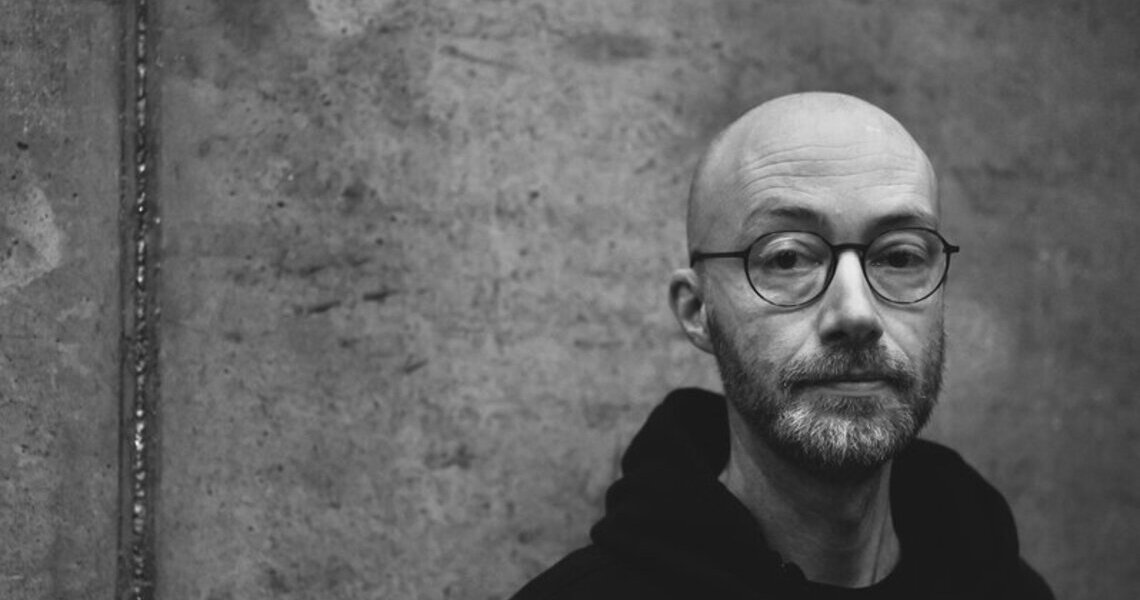
Interview: J. Willgoose, Esq. (Public Service Broadcasting, Late Night Final)
South London’s Public Service Broadcasting began as a one-man audio-visual show, with early live appearances at the 2010 Edinburgh Fringe and in ten years have trawled the BFI Archives to produce works themed around east/west space conquest, the decline of coal mining in South Wales and the Titanic.
With a mantra of ‘Inform, Educate, Entertain,’ and an immersive live experience they have become firm favourites on both the festival and live circuit. Having just completed a lockdown side project as Late Night Final due for release in December (you can pre-order it here), J. Willgoose, Esq. took time out from working on the eagerly awaited fourth PSB album for a chat.
What made you want to get into music?
It might sound simple and / or trite, but… music! There’s been nothing else as exciting or thrilling, or as creatively fulfilling, in my life. Pretty much every major decision I’ve made since the age of about 14 has been taken with music, or staying as close to music as possible, in mind. I can’t imagine a life without it.
Who would you say has had the most influence on Public Service Broadcasting’s music?
That’s really hard to say, as it’s changed a lot since the very early days, and those acts which gave it early impetus seem less relevant now. I think one artist who never loses his relevance, though, is DJ Shadow, especially (and I’m sure he’s sick of hearing people bang on about it) Endtroducing. It’s such a musical vision of hip-hop, such a lifetime’s distillation of careful listening to and crafting of sound. It’s almost a perfect work of art, and it’s a record I come back to time and time again.
You made the transition from self-releasing material to signing with label Play It Again Sam in 2017. Has this affected your creative process, and did you find you had to adjust your way of working in any way?
No, it’s not affected the creative process at all – because PIAS are an indie (albeit the largest indie I think), we still retain full control over every aspect of the record, from artwork to production to tracklisting to single choices and so on. I think if we’d made the decision to go with a major (which was never on the table and which I don’t think I’d be interested in), then that would have had much more potential to change things and to have more people sticking their oar in. I’ve heard some pretty horrendous stories of that kind of label meddling, though and it’s really not why I got into making music, to be told what to make and how to make it by someone else. PIAS give us the freedom to continue to express ourselves as we want to, but with the added nous and network of such a well-established label. And also, it’s not me paying all the invoices and doing all the admin anymore, so it has freed up a quite considerable amount of time and energy, which shouldn’t be underestimated!
Following albums that included Spitfires and space travel, Every Valley marked a move into a more politically active narrative with your music. Was this something you’d consciously wanted to do for a while?
Not particularly, no – I knew I wanted to make a left turn and surprise people with the third record (as we will do with the fourth, too, when it arrives) and I knew I wanted to focus on something more everyday than space travel – to come back down to earth as it were. Mining, and the wealth of material that the BFI had on it, represented a great opportunity to do that as well as a challenge, as it’s not as inherently exciting a subject as manned spaceflight or the ascent of Everest or what have you. Once the broader subject was settled on it was a question of deciding which story to tell and how to tell it, and that’s what led me down the road to Every Valley.
What has been the biggest challenge in your musical career so far?
I think – so far – probably making that record, to be honest – it was a big challenge in terms of the risk it posed to us as a moderately successful band. It was a big effort in terms of the logistics of finding somewhere suitable to record, it was daunting and intimidating to try to get in touch with the NUM South Wales and other ex-miners and people in the community and persuade them to talk to me, and producing and scheduling it all was a mammoth task too. Then there was finishing it, which is the hardest part of any record. It was quite a terrifying experience in many respects, but I think it’s good to challenge yourself in that way rather than just making the same record over and over. You might lose some people along the way, but you can’t let the fear of that dictate what you want to do artistically. Or I can’t, anyway. I can’t see the point of working like that.
I say ‘so far’ because in many respects, the fourth record has been even harder and represented and represents its own challenges… but more on that to come, I suppose.
What has been the nicest thing ever written about you?
In all honesty I can’t remember. I don’t remember the nice things as I immediately discount them as being overly generous. The nastier stuff is the stuff that tends to stick with you, particularly when it’s baseless or unfair as it comes with a side order of indignation and anger that can be quite difficult to tame. I try to steer clear of reading pretty much anything these days, but it’s hard to when you also want to be an engaged and engaging artist online, especially when it comes to engaging with your fans and friends. I want us to continue to be approachable, but that leads to people doing quite thoughtless things like tagging you in bad reviews and so on. They mean well, but I don’t think they really think it through. The only way to avoid that, though, would be to put the walls up and retreat behind them, which seems a bit of a betrayal of the way we’ve operated up until now. It’s quite a hard balance and not one that bands in the past had to worry so much about, I don’t think.
2020 has been a tumultuous year – has it affected your creativity in any way?
Yes it has – I think being creative this year has been a real struggle, and a lot of musicians I’ve spoken to this year have felt the same way. I’m aware it might seem hypocritical to say so, given that I ended up being one of those annoying people who created a record in lockdown, but even that was a real struggle, even if it was also a tonic in its own way. I think the pressure to be creative and to feel like you’re doing something useful has really hindered a lot of people this year, me included. It’s hard because, without the more tangible aspects of the music industry to engage with, like live music, it can often just feel like you’re only ‘playing’ at being a musician, as if it’s a hobby you’re indulging, especially when so many people have been doing such important, life-saving work this year. I tried to keep going despite all that, but it was hard to find the motivation and the energy sometimes.
When we can all get back to going to gigs again, what’s the best way to describe the live Public Service Broadcasting experience?
Ha, I don’t know. I’m probably least well-placed to judge it as I’ve never seen a show! It’s supposed to be a quite overwhelming audio-visual experience, though, and I hope it provides some joy to the people who like it. That’s what I get from the bands I love, and those are the bands I’ve tried to imitate (read: copy) along the way.
You’ve been a great supporter of women in music – Smoke Fairies, Jane Weaver, Mayshe Mayshe, for example – have all provided support at live gigs. Do you share an element of frustration when you see other acts and festivals fail to provide such a balance of opportunities? Do you see any quick fix to the problem?
I’m not sure I could claim to be a great supporter – I haven’t really done that much, but certainly the will is there and I’ve tried to make differences where I can. I don’t think there’s any particular quick fix, no, and I think some more enlightened parts of the industry will be much quicker to react than other, more regressive ones (mentioning no north/south split festival names). One of the things we’ve spoken about a lot is getting more women on stage with us, but also trying to do that without firing any of the people we’ve worked with for several years now too. I hope our budget for the next tour won’t be shot to pieces by the fallout from the pandemic, as it was something we were hoping to be able to start addressing more permanently. We’ll see I suppose.
What has been the best and worst gig you’ve ever played?
I won’t do the worst one as I don’t think that’s fair – I’ve done enough shows so far that I thought were pretty average, to say the least, only to speak to people afterwards who really enjoyed it and rated it very highly, so I’d hate to rain on anyone’s parade. In terms of ‘best,’ I think the one gig that stands out above all others is the Williams Green stage at Glastonbury in 2013. We were just totally unprepared for the reaction that evening. It felt like a physical punch in the stomach, it really was a very visceral experience. Mind you I remember writing a blog post about how special Glastonbury is as a performer and getting someone moaning at me that they wished they hadn’t bought tickets for Southampton as it meant we wouldn’t try as hard… so maybe I should just keep quiet about all gigs!
What was the most recent piece of music you listened to?
I just listened to a demo from album 4 that I’ve sent to someone to have a listen to. I can’t tell you what it is though I’m afraid. It sounded ok though (I’m sure it’ll sound terrible tomorrow).
What other bands or musicians do we need to be checking out right now?
God I’m the worst for this. I’ve had my head in our fourth album for so long now, with the break of the Late Night Final album in between, that that’s just totally occupying my brain. I don’t know.. I’m really enjoying Kelly Lee Owens at the moment and another recent discovery was Juana Molina’s Halo record. Oh and I’ve been in love with Strauss’ Vier letzte Lieder, sung by Jessye Norman, for about 2 years now.
Give us a few hints on what’s in store next for Public Service Broadcasting…
What’s most immediately in store is me slowly, albeit increasingly rapidly, losing my mind between now and finishing the album early next year, then panicking when I finally sit back and look at what we’ve made. And then, hopefully, the upside of the whole process – getting back out on the road in front of real crowds later next year and getting to see and feel the reaction to it every night, making and playing music with friends, for a living. There aren’t many greater pleasures in life than that.
You can catch up with Public Service Broadcasting via their socials, which include Twitter, Facebook and Instagram. J. Willgoose, Esq.’s side project Late Night Final’s album A Wonderful Hope is released via PIAS on the 11th of December. The fourth Public Service Broadcasting album is due for release around spring 2021.
Discover more great music
About the Author: Mark Lawrence

More New Music
Friends and Features