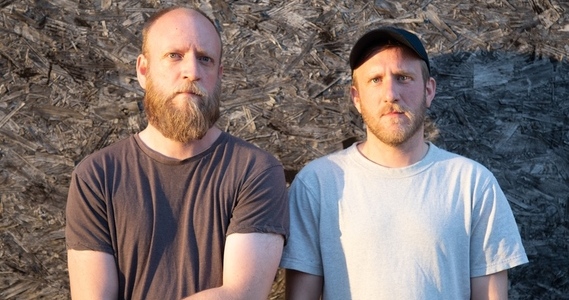
Introducing: Field Glass
Though they have long worked together as part of the School of Noise workshops for kids, the Kin album and Field Glass sees brothers Dan and Jacob Mayfield write and release music together for the first time. We spoke to the brothers about the album, their music workshops and creative process. Read on to find out more.
First up, could you tell us a bit about Field Glass?
(Dan) As far back as I can remember Jacob and I have played music, but for whatever reason we’d never written anything together. In 2017 we decided to give it a try and took various instruments and effects from our homes into a rehearsal space to see what happened. We both knew from previous experience that writing music can have the ability to drag us into places of minuscule detail where fun and creativity can easily make way to clinical and irrelevant precision. This is not what we wanted to do this time around.
What inspires you to write?
(Dan) Playing with sounds to create music is a lovely thing to do and getting to do this with my brother is great. We don’t live in the same town anymore so whenever we get together, we can have a catch up whilst making music, win-win.
What was the impetus for you working together after so many years?
(Dan) As we would be setting up for a School of Noise workshop we would sometimes start jamming together before 30 children would rush into the room and everything would stop. We decided that we should actually sit down together without any distractions and see if we could actually come up with something we genuinely enjoyed.
How does the creative process work within Field Glass?
(Dan) When coming up with Field Glass we spent a lot of time talking about the type of band we’d like it to be, considering the instruments and effects we wanted to use and sort of created an imaginary mould that the music would fit into. Once we sat down to write, the music filled the mould pretty easily, which is what we’d hoped would happen but couldn’t be 100% certain. One vital aspect was that we didn’t want to get bogged down by being too critical of ideas. With just the two of us if we both agreed on something, then that was it, we kept it and moved on.
Most tracks started either with Jacob programming a drum beat on the 606 and me playing some chords over the top, or visa-versa with me playing a chord progression or melody and then adding a synth or drums beat.
We also wanted to create music that would be played live. Most of the tracks on the album only have a few layers of sounds
Who would you say has had the most influence on your sound?
(Jacob) Our influences come from a whole range of places, but we’re particularly drawn to bands and artists who combine acoustic and electronic sounds, and use effects in a musical way. We love bands such as Low, Múm and The Books. Individual artists such as Brian Eno, Suzanne Ciani and Aphex Twin are also a constant source of inspiration.
What song do you always find yourself singing along to?
(Jacob) The theme tune to Waffle the Wonder Dog… but a serious answer would be the beautiful song by the experimental composer Gavin Bryars called Jesus’ Blood Never Failed Me Yet. It is a looped sample of a homeless man singing accompanied by an orchestral arrangement. It’s incredibly moving and one that stays in your head for days after listening to it.
If you could support anyone, who would it be and why?
(Jacob) If we could support anyone right now, it would probably be Nils Frahm. His live setup is quite incredible, and I would love the opportunity to see it up close. He performs the Space Echo with as much passion and energy as he does the piano, and I love that.
You founded School of Noise in 2015. Could you tell us something about the project?
(Jacob) It started out with just a few friends getting together to have fun exploring and experimenting with old and unusual electronic instruments, and has since grown into workshops for all ages and all abilities. We aim to provide creative and imaginative activities using sound in an accessible, fun and educational way. We visit schools, arts centers and festivals all around the UK, and we have also travelled to China, Czech Republic, Netherlands, Oman, Spain and the United Arab Emirates to deliver workshops and seminars.
Is there a specific moment or inspiration behind recent single Gardens?
(Dan) It was the first track we made using the Omnichord. I think that because it has such a distinctive sound there’s no point hiding that it’s being used, so we wanted to put it right to the front of the mix. We have fond childhood memories of spending time in our grandparent’s garden in Lincolnshire, so the song is named after that.
What’s up next for Field Glass in terms of projects, new releases, live performances…?
(Dan) We’d love to play some live shows and a lot of the music was written so that it can be played pretty much live (with the exception of the odd sample being triggered here and there!). We are also halfway through recording the second record so hopefully that won’t take too long before it sees the light of day.
Gardens and the Kin album by Field Glass is out now on limited edition clear vinyl lathe cut LP and to stream on all major digital platforms. Kin is available via the Happy Robots Bandcamp page. Find out more about the brothers and the Kin album on their Twitter, Facebook, and Instagram accounts.
Discover more great music
About the Author: Mark Buckley

More New Music

Friends and Features