Track By Track: Pebbledash – To Cast The Sea In Concrete
One theme that’s ever more noticeable in the recent resurgence in shoegaze and associated genres is how many acts use it as a springboard for experimentation.
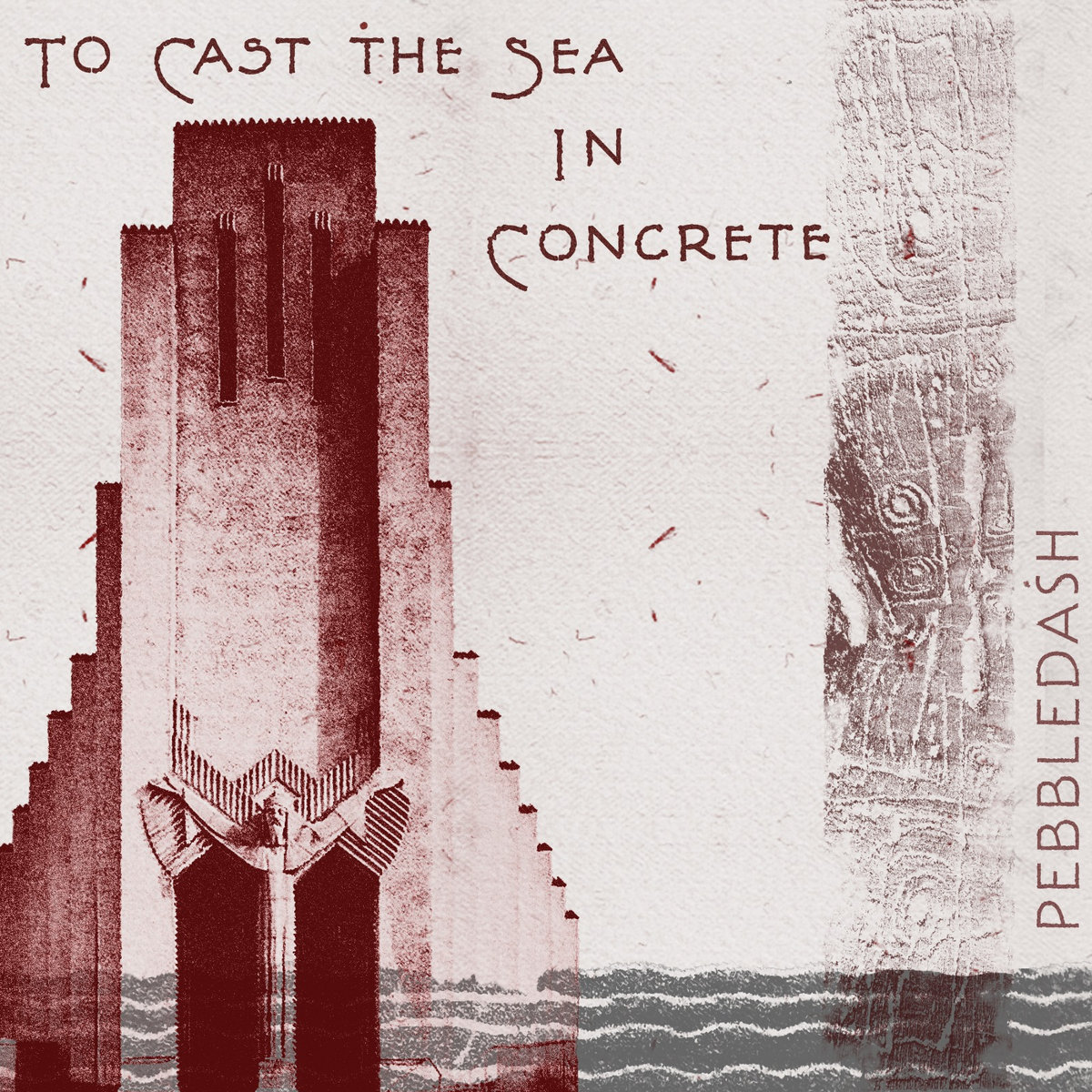
To Cast The Sea In Concrete by Cork band Pebbledash does that by bringing in elements of traditional Irish folk, finding commonalities between two rather disparate genres. I’d not really considered any folk influences for the current wave of Irish, specifically Cork-based, bands, but now it feels rather intuitive at times.
The EP, through its lyrics and the visuals the band employ, is also tied to a sense of place. When it comes to dream pop and noise – two other genres you can hear throughout – that is again rather unusual, and again, it’s something that is often found in a traditional milieu.
It presents the listener with a series of songs that are as likely to appeal to fans of Lankum as My Bloody Valentine and leaves you thinking, ‘How did they do that?’
Sí Bheag, Sí Mhór
This is a traditional tune that’s believed to have originated with Turlough O’Carlon, the blind harper and singer who penned so many enduring pieces of music. Live, we’ve been playing this tune as an intro to Tiles and Moss for more than a year; the two are nearly inseparable for us, so it seemed only right that this was reflected on To Cast the Sea in Concrete.
It’s an appropriate entryway into the EP’s world, we think, where we tried to combine the drones and textures of traditional music with those of dreampop and noise.
Tiles & Moss
This has been a favourite of everyone in the band since we introduced it to our live set, and I think it’s definitely one of our most immediate and propulsive songs. We in the band have such a great time playing it, and it’s received such a wonderful response from audiences in the past, that we’ve held back from recording it until we were all satisfied of its readiness.
It’s wonderful to see people dance to this one at gigs once the drums come in, and to see people sometimes sing back the Velvet Underground-esque backing vocals.
Isn’t It Always
The lyrics on this track are quintessential Pebbledash, to me, being somewhat of a microcosm of the EP’s themes, in the contrasts between urban and natural landscapes and the intrusion of one into another (‘Brackish water fills Shandon bells’) and the intense introspection and emotional turmoil at its heart.
This track was one where we really tried to emphasise a variety of different textures and layer drone upon drone, varying from keening feedback to the slightly dissonant strains of a harmonium, to ethereal, Mellotron-toned synths.
An Fear Marbh
Translates to The Dead Man, referring to the name of the largest of the Blasket Islands off the coast of County Kerry, which viewed side-on resembles a giant in repose; the references for Fionbharr’s bone-dry, creaking, bowed guitar included a ship breaking apart, or an island sinking beneath the waves, so it seemed appropriate.
In addition to the synths and guitar, the metallic, distorted drone running throughout consists of the tail of a cymbal hit, slowed, processed and re-recorded from a phone speaker being played into a talkback mic hailing from the train station at Limerick Junction (thanks, Cathal!).
The samples of the three vocals which chant throughout Cell rise from beneath the harsh guitar and oppressive drones, ghostly, glitching and repeating before echoing into nothing, leading into…
Cell
Contrasting the first three tracks, we wanted the latter half of the EP to showcase the slightly darker-hued, more menacing aspect of our songwriting. Fionnbharr’s lyrics on this track reckon with the parts of an individual that can frighten them, that one usually keeps hidden from view; this tumultuous emotional content is reflected by meditations on the futility of life itself, as three chanting vocals intone throughout the verses.
The feedback section of this song was vital for us to do justice to in the studio, as we relish playing it live each time when we close our set, dragging guitars along the ground in a maelstrom of sound.
O The Wind
This track represented a very new departure indeed for the band; upon recording it, we had yet to play it live, a first for us. The track’s opening section foregrounds the listless emotion of Asha’s lyrics, delivered in the ornamented style of a traditional sean nós tune accompanied only by the wheeze of air passing through a harmonium’s body and Fionnbharr’s spare guitar.
But from there, we wanted the bass and drums to carry Asha’s stark lyricism atop an off-kilter groove more akin to the likes of DJ Shadow or Portishead, propelling the listener in unforeseen directions before the song returns home, the vocal standing alone amidst a landscape of Terry Riley-esque arpeggios.
The Shape of A Day
Bookending the EP, we have another interlude consisting of Fionnbharr and Cormac on guitar and drones – this time, a wall of fuzz and feedback atop the harmonium. The chord progression mirrors the chorus riff of Tiles and Moss slowed to a crawl; Fionnbharr had the concept for ending the EP on such a reprise in mind for a while.
Whilst it was important to us to have many of the tracks on the EP flow into one another seamlessly, we wanted the opposite for this one: for it to slam into the listener like a wave, sudden and a bit overwhelming.
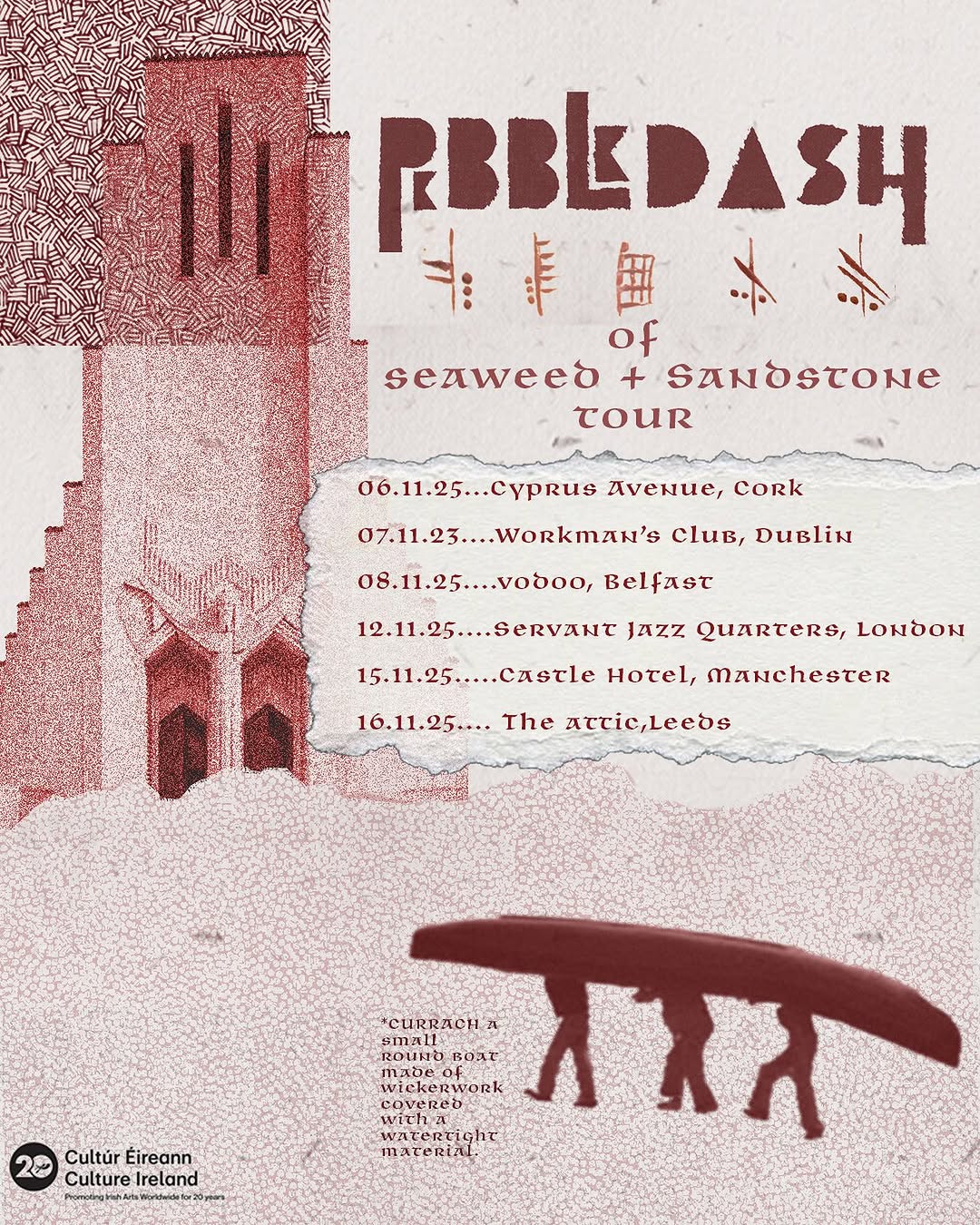
To Cast The Sea In Concrete is available in digital, CD, and vinyl formats on Bandcamp. Pebbledash are currently touring the UK and Ireland. Head to their Instagram for ticket and venue details.
Discover more great music
About the Author: Mark Buckley

More New Music
Friends and Features